GuideJangsu Trail Race 38K: Rainy-Day Finisher Review
A firsthand review of the April 2026 Jangsu Trail Race 38K-P, including the rain-shortened course, cutoff strategy, aid stations, gear, and finish.
I'd originally signed up for the 70K. Months of training, feeling pretty good about my fitness. Then the rain started the night before the race. Before long, an announcement came through: course shortened. 70K down to 38K-P. My first reaction? Total disappointment. But after crossing that finish line, every muscle in my body made it clear — this 38K was no joke.
This is my finisher's report from the Jangsu Trail Race 38K-P, held on April 4, 2026. Course details, aid station highlights, cutoff strategy — everything you need if you're planning to tackle this race.
Race Overview
[Check Venue Location]
📍 Jangsu Sports Complex
| Item | Details |
|---|---|
| Race Name | Jangsu Trail Race |
| Date | April 4, 2026 |
| Original Distance | 70K |
| Actual Distance | 38K-P (shortened due to rain) |
| Start Delay | Approx. 2 hours (safety measure due to weather) |
| Course Highlights | Jangsu Start → Waryongsan Recreation Forest → Jagogae → Subun Village → Sadubong → Jangsu Stadium |
| Organizer | Jangsu County / Trail Running Organizing Committee |
Before the Start – Car Camping and Heavy Rain
I rolled into Jangsu the night before and set up camp in the Sports Complex parking lot. Plenty of space, perfect for sleeping in the car. Hit a convenience store nearby for cup ramen and gimbap — my go-to race morning fuel. Could've grabbed some bread or cake, but why mess with what works? Familiar food means no stomach surprises on race day.
The rain hammered down all night. By morning, things were looking rough. The organizers called it: 70K shortened to 38K-P, start delayed two hours. I found the water purifier inside the stadium building, made my cup ramen, ate my gimbap, and waited.
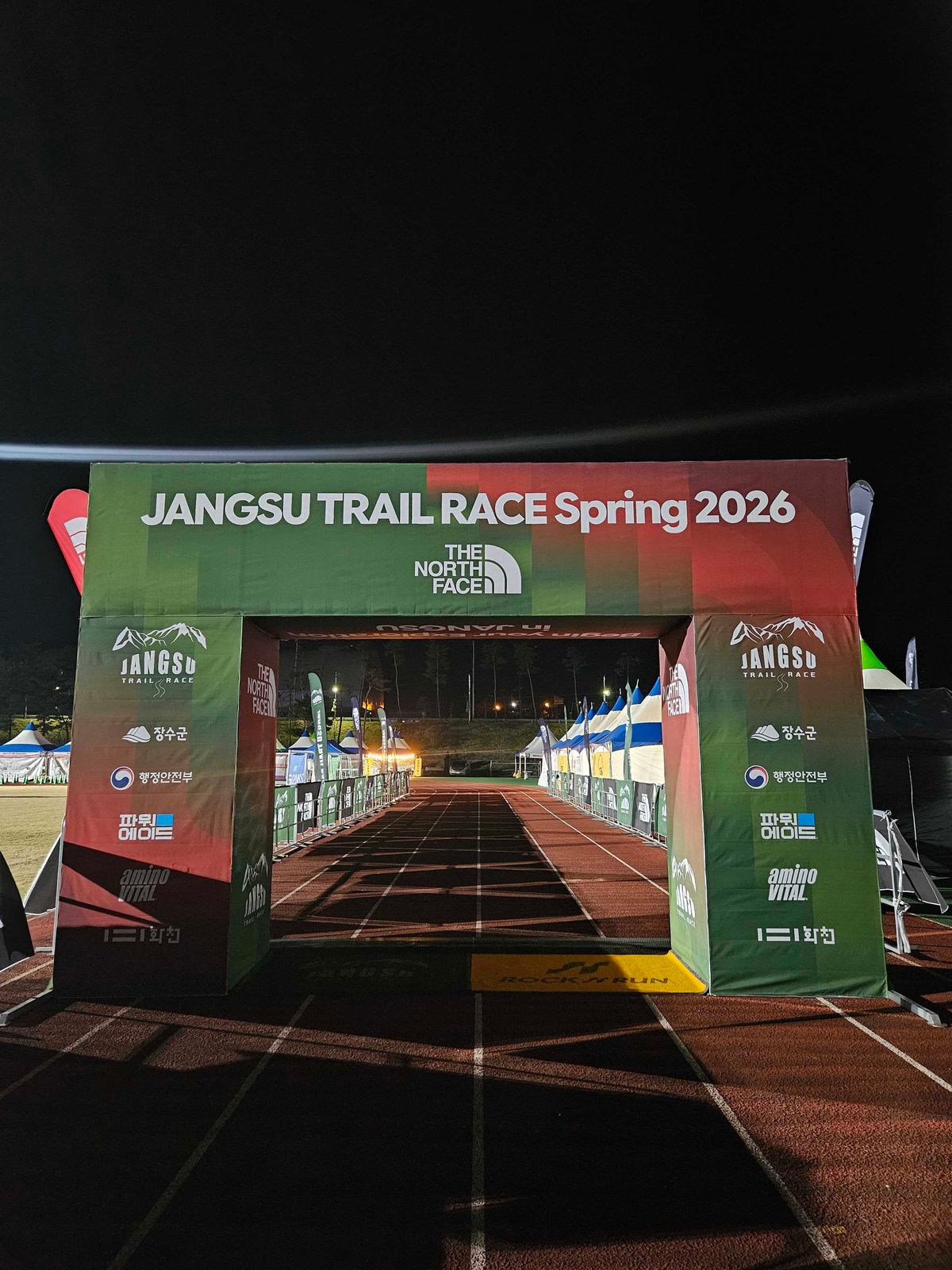
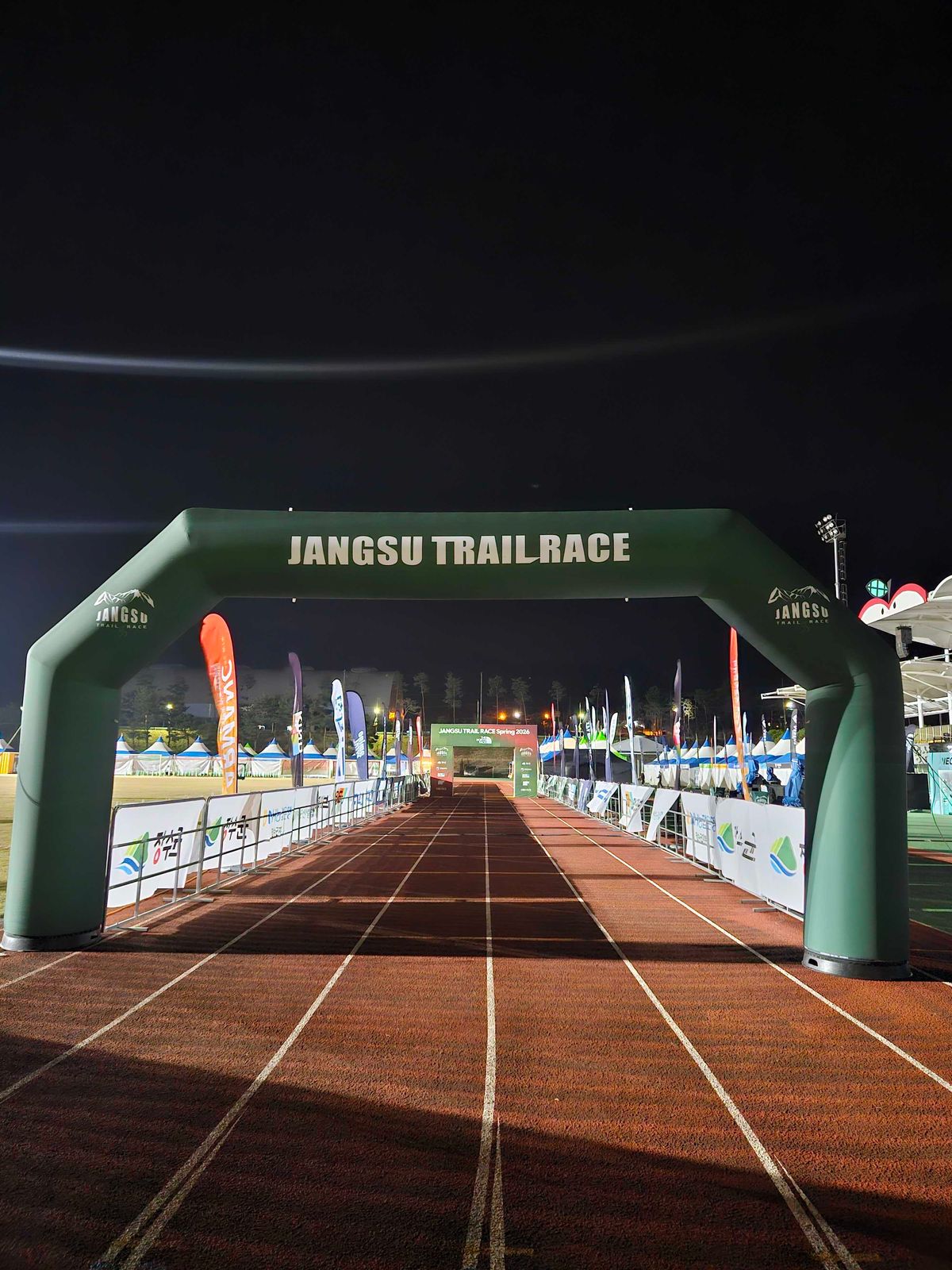
Those two hours dragged. Keep warming up? Save energy? I went with light stretching and ended up talking with other runners. Everyone had that same look — half disappointed, half relieved.
Course Breakdown and Difficulty by Segment
The 38K-P course breaks down into four main sections.
1. Start to Waryongsan Recreation Forest (CP1)
You're climbing into the mountains right from the gun. The overnight rain turned the trails into a mud fest — one wrong step and you're sliding. Saw plenty of runners eating dirt around me.
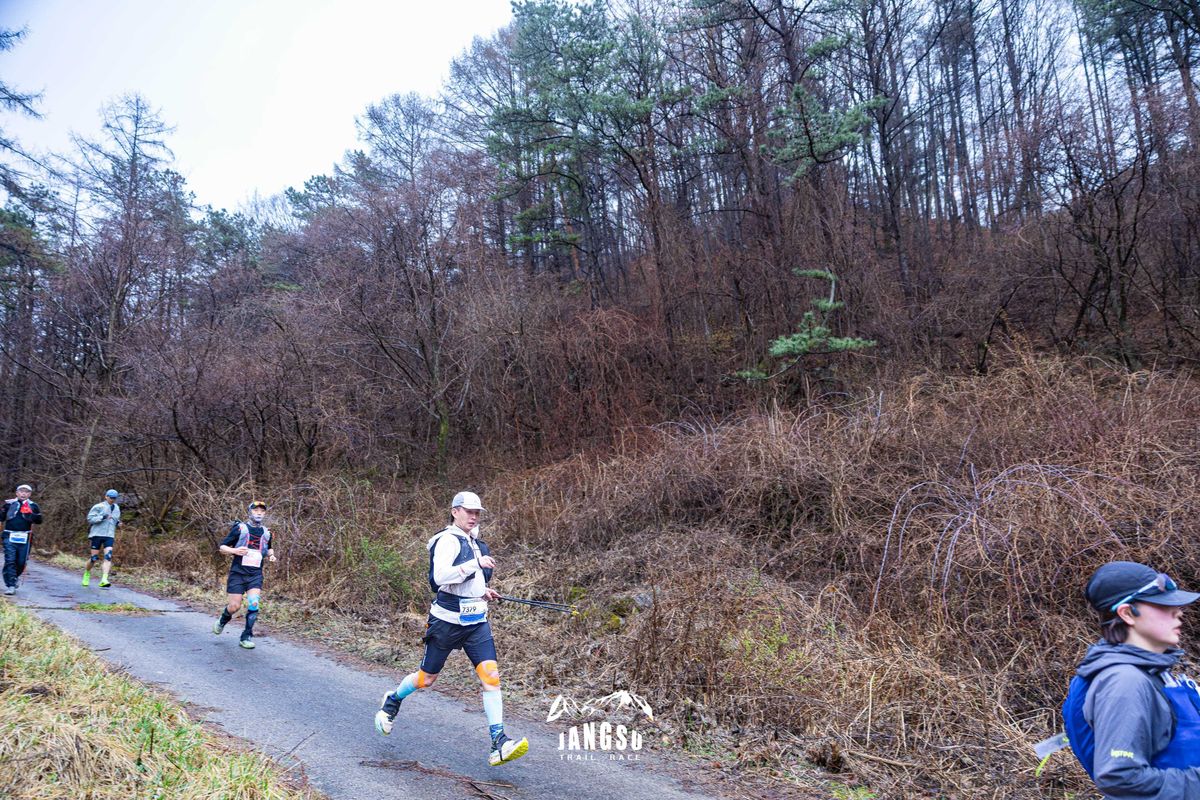
Here's what you need to know: the CP1 cutoff at Waryongsan Recreation Forest is tighter than you'd think. With the two-hour delay already eating into our time, I kept checking my watch constantly. No time for sightseeing — just steady, relentless forward motion.
2. Jagogae Water Point
My legs were already cooked when I hit Jagogae. Then someone handed me a cup of tomato juice. Never in my life did I think tomato juice could taste that good on a mountain. Hit my legs with some muscle relief spray too. Small victories, but they got me through the back half.
3. Subun Village Aid Station
Subun Village was the highlight of the whole race. Volunteers were dishing out rice balls and kimchi, and they were incredible. There's something magical about eating a rice ball mid-race on a mountain. The salty kimchi hit just right — felt like it wiped out all my fatigue in one bite.
Took a second to breathe and do the math. Just get over Sadubong. That became my mantra.
4. Sadubong to Jangsu Stadium (Finish)
I'm not gonna sugarcoat it — Sadubong was brutal. The gradient was mean, and it just kept going. Every time I thought I was near the top, nope, more climbing. My legs were screaming, lungs burning.
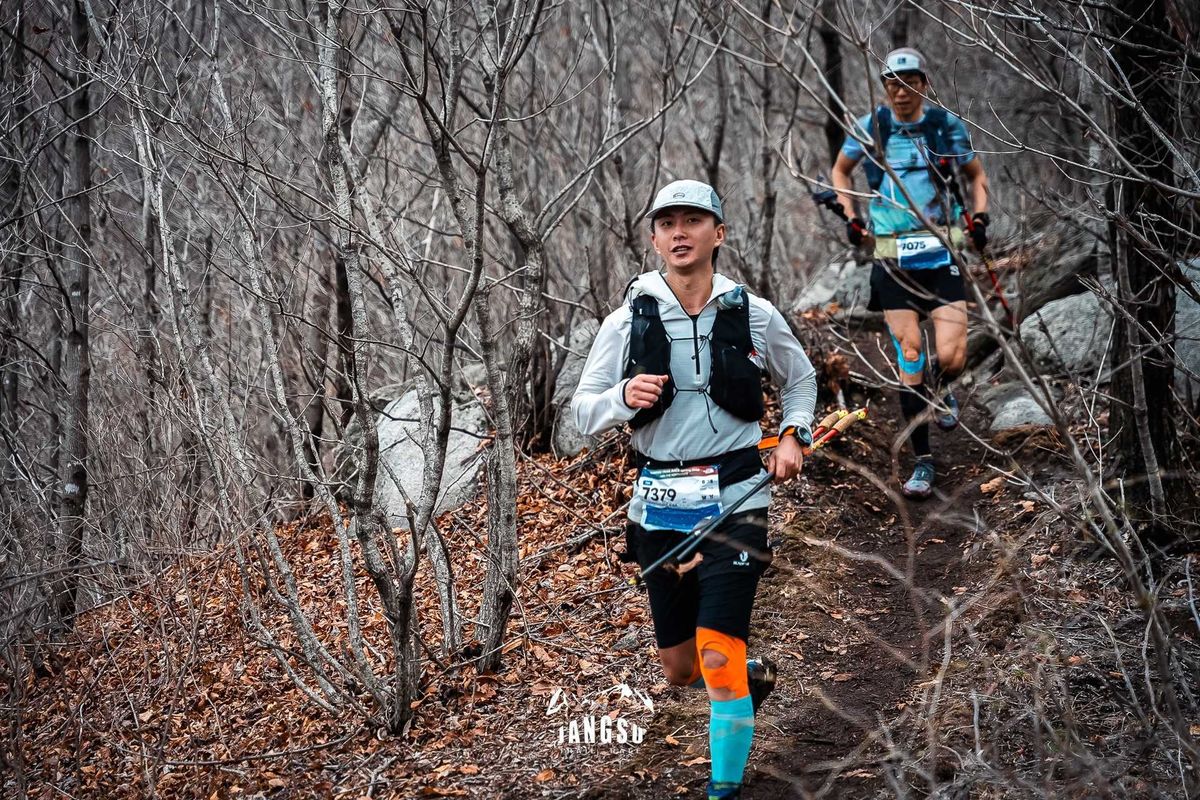
Then I heard them — the cowbells at Jangsu Stadium. Clear as day, but the finish line wasn't getting any closer. That special kind of torture only trail runners understand.
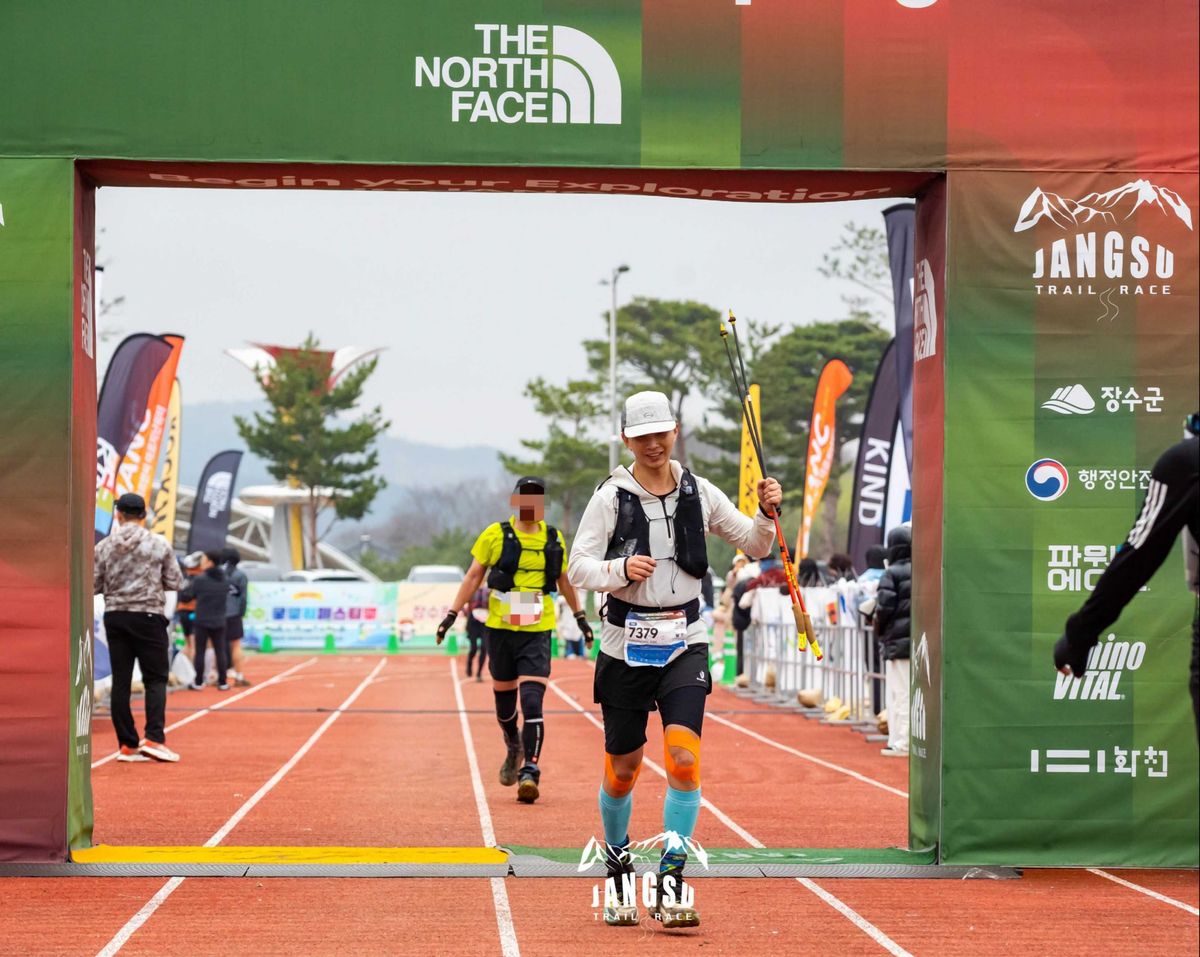
But I made it. The cowbells got louder, the stadium appeared, and something took over. Dead legs suddenly found another gear. Funny how that works.
Practical Tips for the Jangsu Trail Race 38K
After finishing, here's what I wish someone had told me beforehand.
| Area | Tip |
|---|---|
| Cutoff Strategy | The CP1 cutoff at Waryongsan is tight — maintain a consistent pace from the start |
| Weather Prep | Rain is likely even in spring; a waterproof jacket is essential |
| Traction | High-grip trail shoes recommended; watch out for wet leaves on the path |
| Aid Station Strategy | Make full use of the Jagogae water point and Subun Village aid station |
| Muscle Care | Bring muscle relief spray, kinesiology tape, or similar recovery supplies |
| Sadubong Mindset | The late-race climb up Sadubong is the toughest section — pace your energy accordingly |
Aid Station Food Summary
The aid station game at Jangsu Trail was on point — seriously impressed with the food quality.
| Aid Station | Food / Services Provided |
|---|---|
| Waryongsan Recreation Forest | Energy gels, water, drinks, snacks |
| Jagogae Water Point | Tomato juice, water, muscle relief spray |
| Subun Village Aid Station | Rice balls, kimchi, and other warm food |
| Jangsu Stadium (Finish) | Food and drinks provided post-race |
Rain-Shortened Course: What I Gained Instead of Lost
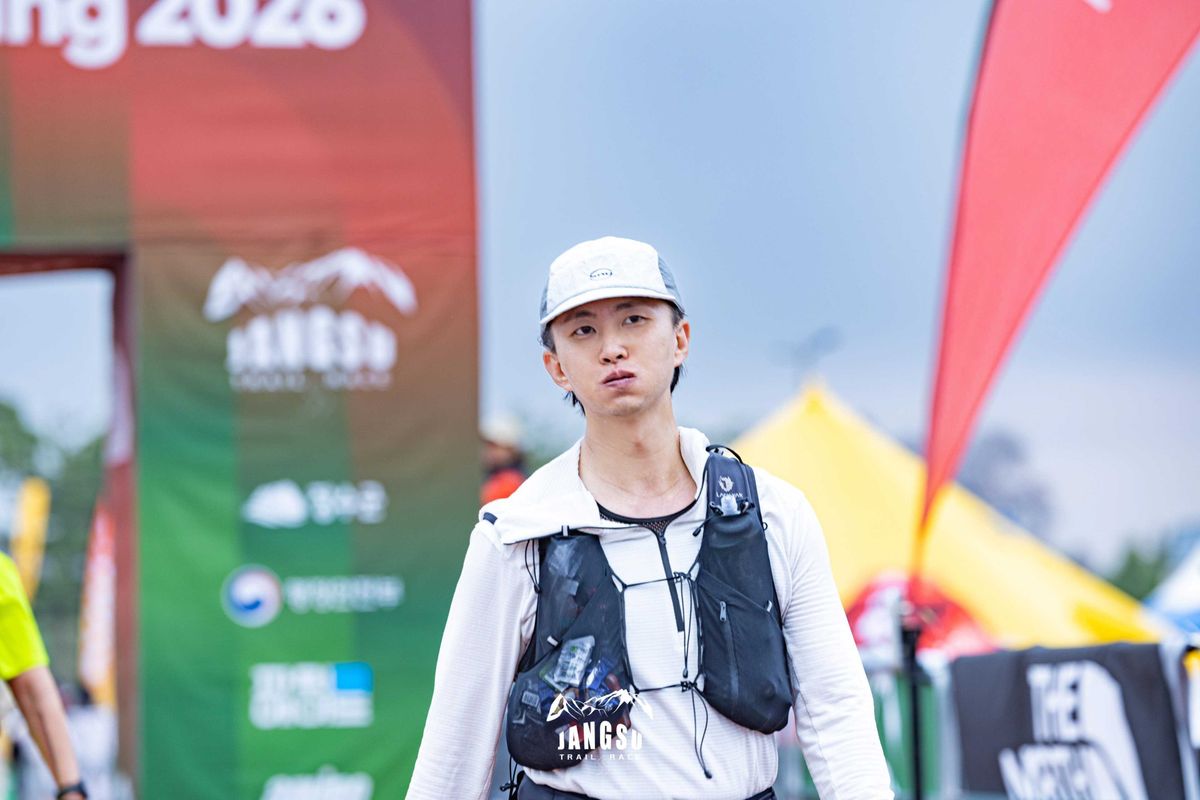
Train for a 70K, run a 38K-P — yeah, that stings at first. But once I finished, my perspective shifted. The 38K wasn't short by any stretch, and finishing it in those conditions felt like a real accomplishment.
The organizers made the right call. After that much rain, the mountain was sketchy — running the full 70K would've been asking for injuries. Sometimes finishing safe beats finishing long.
🚗 Getting There & Where to Stay
For anyone planning to run Jangsu Trail in the future, here's the logistics rundown from my experience.
Getting to the Venue
📍 Jangsu Sports Complex
Drive if you can — public transport to Jangsu is pretty limited:
- About 2.5 hours from Seoul
- The stadium parking lot is huge — car camping totally works (showing up the night before is the move)
- Sleep at the venue = steps from the bathrooms, start line, and warm-up area
📅 Recommended Day-Before Timeline
| Time | Action |
|---|---|
| 3:00–5:00 PM | Arrive in Jangsu, secure a parking spot |
| 5:00–6:00 PM | Buy breakfast supplies at a convenience store or market |
| 6:00–8:00 PM | Dinner in town (carb-heavy — noodles, rice dishes) |
| 8:00–9:00 PM | Final gear check, attach race bib |
| 9:00–10:00 PM | Sleep (early wake-up ahead) |
💡 Car Camping Tip: The stadium parking lot gives you bathroom access and zero morning commute. Pack a decent blanket and pillow — you'll sleep better.
🏨 Accommodation Options
Jangsu Town Centre (5 minutes by car from the stadium):
- Mostly motels and pensions — book early, they fill up race weekend
- Running with a crew? Get a pension with a kitchen for proper carbo-loading and post-race celebrations
Book Your Stay
🏪 Nearby Facilities
📍 Jangsu Town Centre (convenience stores and restaurants)
- Convenience stores: CU and GS25 in town, about 5 minutes from the stadium
- Supermarket: Small local market in town (closes around 8 PM)
- Post-race recovery: Public bathhouse in Jangsu town — absolute heaven after the finish
Final Thoughts
Jangsu Trail Race delivers on scenery and organization. If you want a spring trail race, definitely put this on your list. Just know that weather's a wildcard — come ready for anything, especially that tight CP1 cutoff at Waryongsan and the soul-crushing Sadubong climb.
Next time, I'm coming back for the full 70K. That's what keeps me hitting the trails.
FAQ – Common Questions About Jangsu Trail Race
Q. How difficult is the Jangsu Trail Race 38K course?
A. Upper-intermediate for sure. Sadubong at the end will test everything you've got, and wet spring conditions turn the trails into slip-n-slides. You'll want some trail miles in your legs before attempting this one.
Q. Is managing the cutoff times important?
A. Absolutely — especially CP1 at Waryongsan Recreation Forest. It's tighter than expected. Start too easy and you'll miss it. Keep it steady from the gun.
Q. What food is available at the aid stations?
A. Waryongsan has gels, snacks, and drinks. Jagogae's got that amazing tomato juice and water. Subun Village brings the goods with rice balls, kimchi, and hot food. The aid stations here don't mess around — use them.