Guide2026 TransJeju 100K DNF|IT Band Pain from 10km to Seongpanak
My 2026 TransJeju 100K DNF report: knee pain began near 10km, but I continued to CP5 Seongpanak at 59km. CP times and lessons for another attempt.
At 5:00 AM, when I left Jeju World Cup Stadium, my goal was still a 23:30 finish. I reached CP1 five minutes ahead of plan. Around 10km, however, the outside of my knee began to ache. At approximately 59km, I finally had my bib cut at Seongpanak.
It was my first trail-running DNF. I covered nearly 49km after the pain began, but I knew what the final 45km would involve and decided to stop. This is not a 2026 TransJeju 100K success story. It is my Seongpanak DNF report.
The symptoms and medication mentioned here are only a record of my personal experience. I did not receive a medical diagnosis of iliotibial band syndrome during the race. Anyone with similar symptoms should prioritize professional medical advice.
2026 TransJeju 100K result at a glance
| Item | Details |
|---|---|
| Race date | October 3, 2026 |
| Intended course | Start and finish at Jeju World Cup Stadium, about 104km |
| Actual finish | CP5 Seongpanak, about 59km |
| Time on course | 05:00-19:40, about 14 hours 40 minutes |
| Reason for DNF | Lateral knee pain from around 10km |
| Original goal | 23:30 finish, 18 hours 30 minutes |
The start and finish venue was Jeju World Cup Stadium.
📍 Jeju World Cup Stadium
Planned versus actual checkpoint times
Comparing my 2026 TransJeju 100K sub-19-hour race plan with the actual checkpoints makes the effect of the pain clear.
| Point | Distance | Target | Actual | Difference |
|---|---|---|---|---|
| START Jeju World Cup Stadium | 0km | 05:00 | 05:00 | On plan |
| CP1 Healing Forest | 7km | 05:55 | 05:50 | 5 min early |
| CP2 Yeongsil | 20km | 08:20 | 08:40 | 20 min late |
| CP3 Eorimok | 28km | 09:55 | 11:10 | 1 hr 15 min late |
| CP4 Gwaneumsa | 41km | 11:20 | 12:30 | 1 hr 10 min late |
| CP5 Seongpanak | 59km | 15:50 | 19:40 | 3 hr 50 min late, DNF |
| FINISH Jeju World Cup Stadium | about 104km | 23:30 | Did not reach | - |
I was ahead of plan at CP1, but the pain began on the way to CP2. Descents were worse than climbs, and the gap grew dramatically while crossing Hallasan and descending toward Seongpanak.
Finish projection recalculated at each checkpoint
The in-race recalculation in my trail race checkpoint pace planner (Korean) takes the actual arrival time at a checkpoint, finds the pace ratio so far, and applies the same ratio to the remaining segments. Applying the same method to my pre-race plan and actual times gives the following. Checkpoint stops were already included in the planned segment times, so I did not subtract rest time separately.
| Checkpoint reached | Actual time | Pace vs plan | Recalculated finish | vs 23:30 target |
|---|---|---|---|---|
| CP1 Healing Forest | 05:50 | 9% faster | 21:49 | -101 min |
| CP2 Yeongsil | 08:40 | 10% slower | 01:21 next day | +111 min |
| CP3 Eorimok | 11:10 | 25% slower | 04:12 next day | +282 min |
| CP4 Gwaneumsa | 12:30 | 18% slower | 02:54 next day | +204 min |
| CP5 Seongpanak | 19:40 | 35% slower | 06:03 next day | +393 min |
By the numbers, a sub-midnight finish was already unlikely at CP2 Yeongsil. Even at Seongpanak the projection stayed within the 29-hour limit (10:00 the next day), but that assumes the pace so far simply continues. In reality the pain got worse on every descent, and after Seongpanak came wet rocky trails at night. Whether I could move safely through the remaining 45km mattered more than whether the math still fit inside the limit.
Entering checkpoint arrival times into the planner during a race shows this projection immediately.
Arrival and runner registration
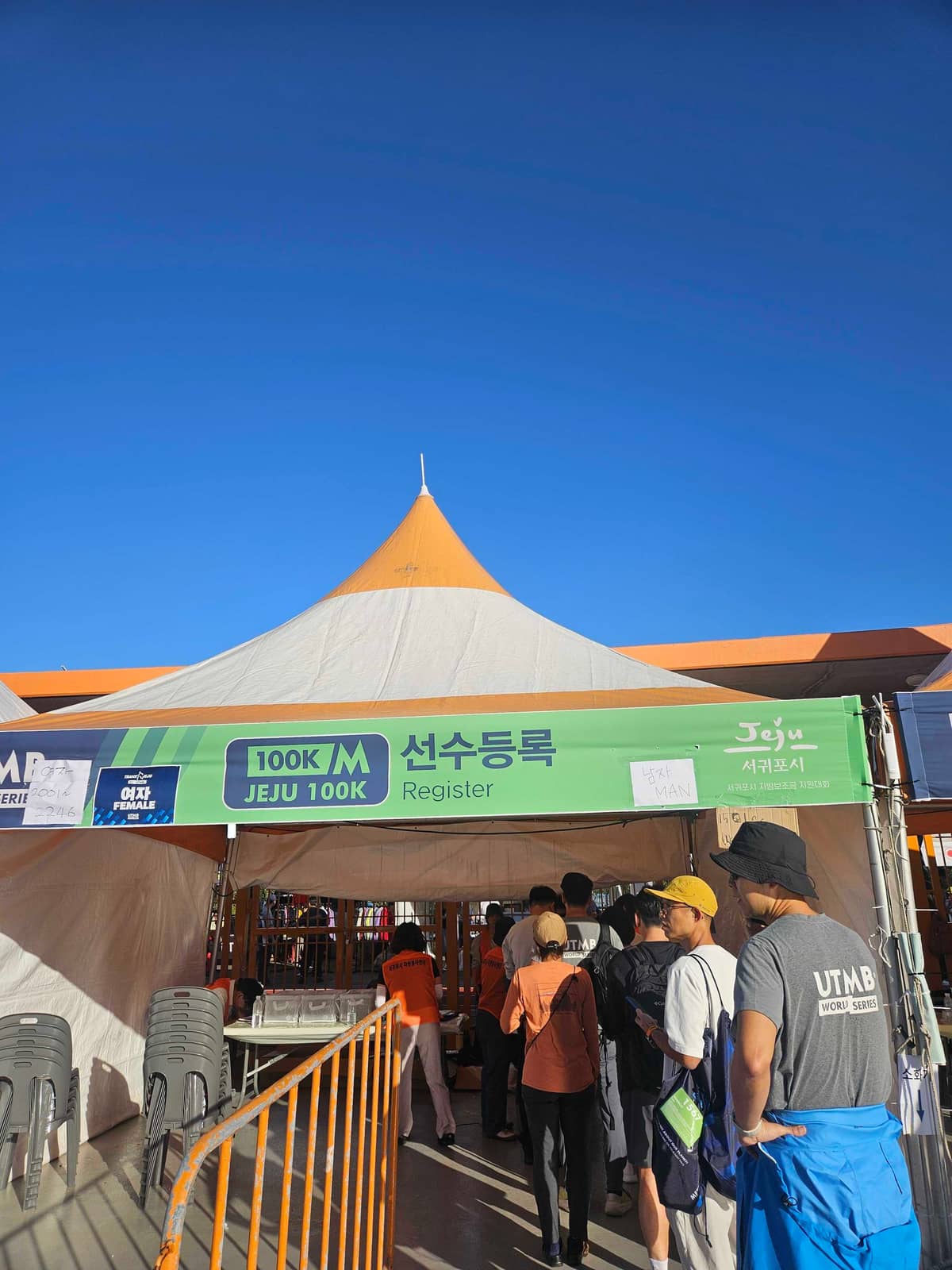
Race weekend had finally arrived. After flying to Jeju, I boarded bus 182 at Gate 5 of the airport and got off at Jeju World Cup Stadium. There was a wait, but everyone in line was able to board.
I collected my bib, looked around the race booths, and stopped at a supermarket for the breakfast I would eat the next morning. After reaching the accommodation, I showered and went straight to sleep.
A 2:30 AM wake-up and 5:00 AM start
I woke at 2:30 AM, heated the meal I had bought the day before, and also ate roll cake and bread to load up on carbohydrates.
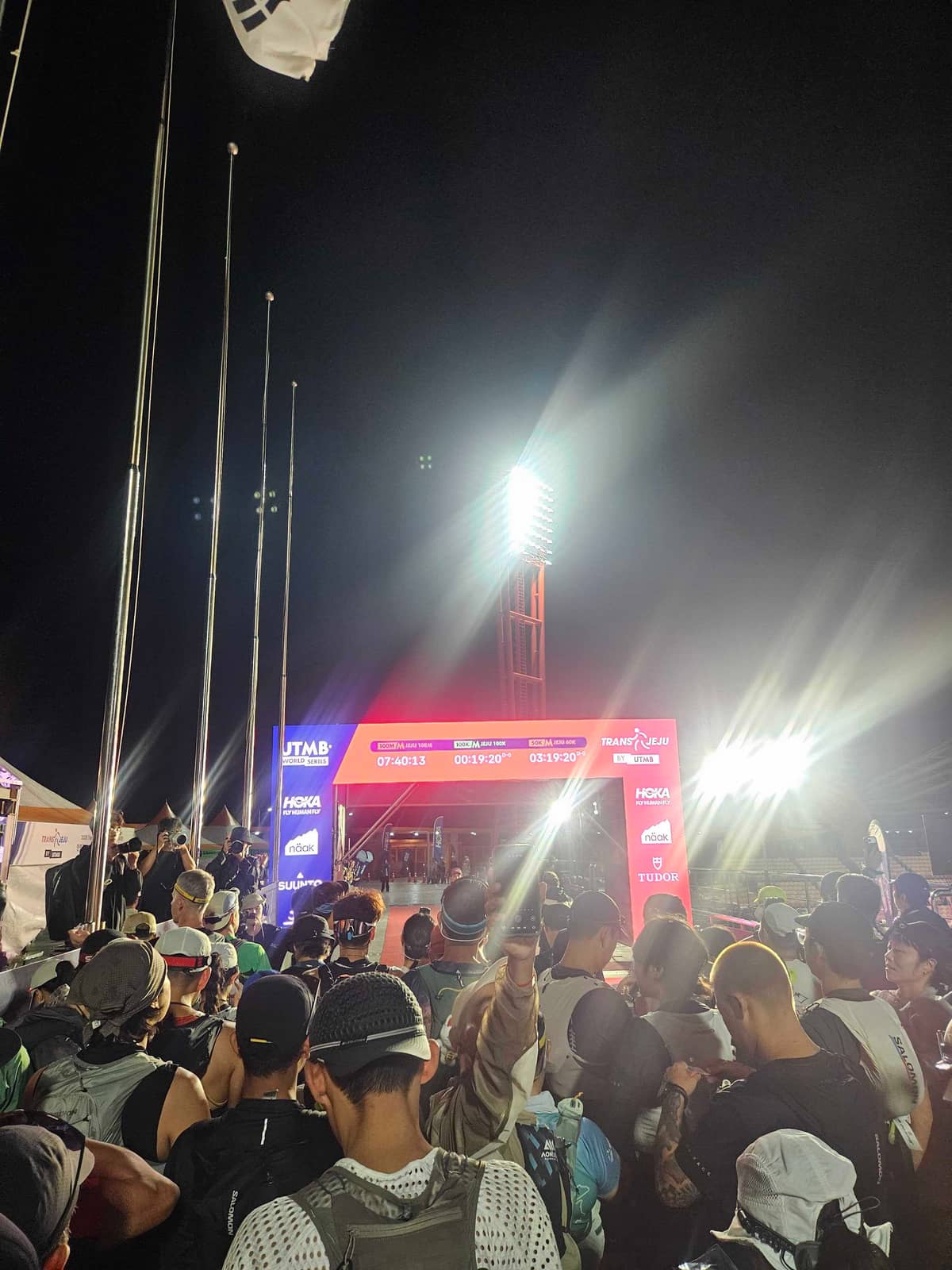
At the venue, I used the restroom and loosened up. The start arrived quickly. I was excited, happy, nervous, and shaking, with adrenaline surging through my whole body. At 5:00 AM, we set off together.
CP1 Healing Forest 05:50|Five minutes ahead
The race began with a gradual uphill on the road. I kept jogging, even slowly, to avoid traffic lights and a trail bottleneck. My strategy was to clear the congestion early because the race would become difficult later anyway.
I reached CP1 Healing Forest at 05:50, after roughly 7km and five minutes ahead of plan. I refilled water, ate two bananas, and left immediately. Everything still seemed to be working.
Around 10km|The lateral knee pain begins
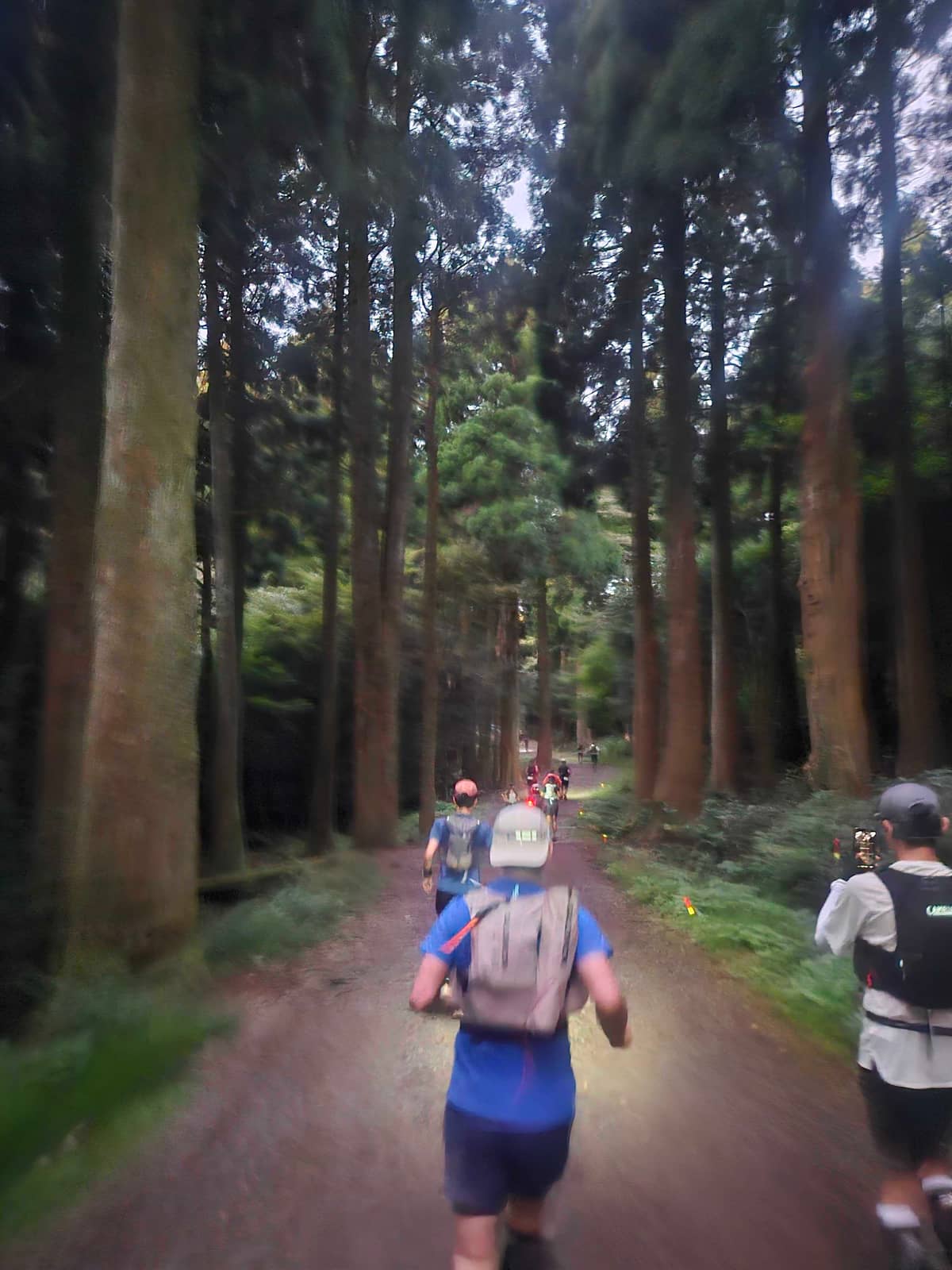
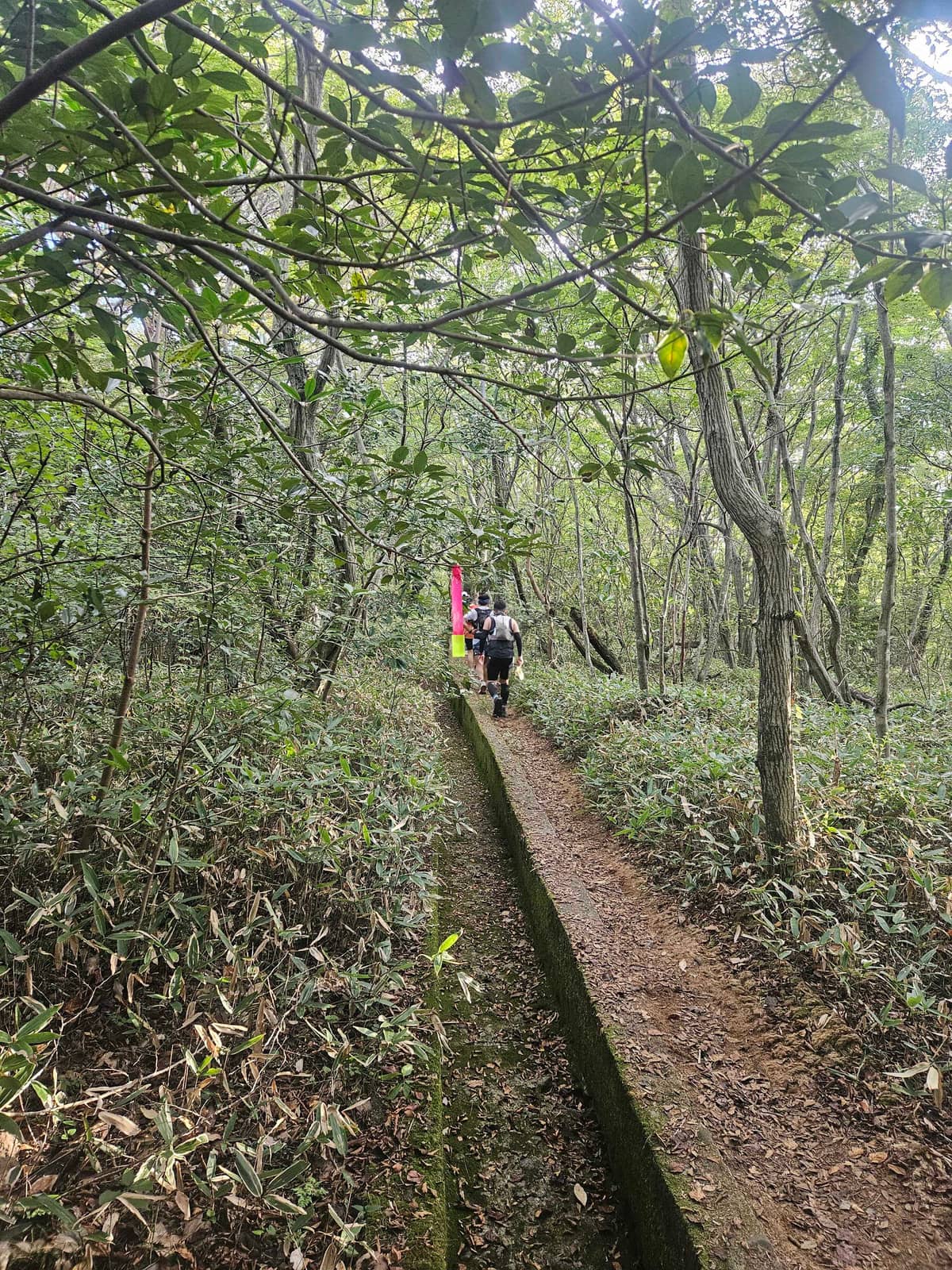
The climb into Healing Forest began on palm-fiber matting before turning into a trail of rocks and exposed roots. It was still dark, so I focused on keeping the runner ahead in sight.
A runner passed me, moved into the gap in front, and then slowed as the group ahead pulled away. I worried that the runners behind would bunch up and leave me leading the line, so I passed and pushed harder to catch the group ahead. Once I reached it, however, there was yet another gap. It felt like a traffic jam with no visible cause.
After several passes I caught my friend, but the outside of my knee had begun to ache whenever I ran. It felt like the IT band pain I had experienced before. I was only around 10km into the race, and I was already worried.
I stopped running, rested, massaged the area, and resumed slowly. The pain kept building as I entered the long Hawon waterway section. For the first time in my trail-running life, I considered a DNF.
I called my friend and said I wanted to stop, but we agreed to meet at CP2 first. I continued while practically clutching my knee and reached CP2 Yeongsil at 08:40.
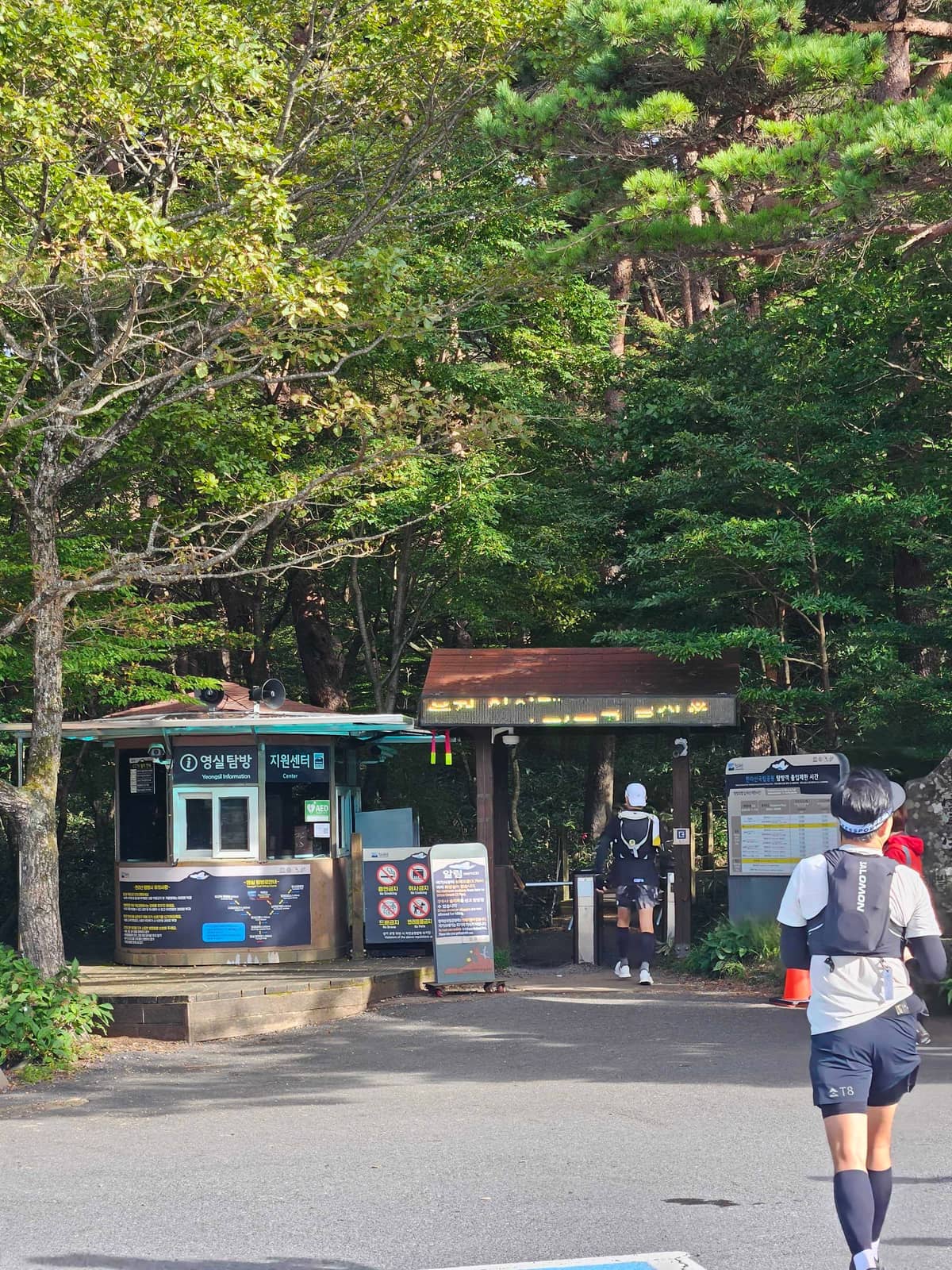
CP2 Yeongsil 08:40|A wooden stick toward Witseoreum
At CP2, I refueled and took two Tylenol tablets. My friend said he would give up his time goal if necessary and asked me to keep trying. We moved again.
I began to feel cold while resting after taking the medication, so I put on my waterproof jacket. Walking was painful enough that I picked up a fallen branch and used it as a trekking pole.
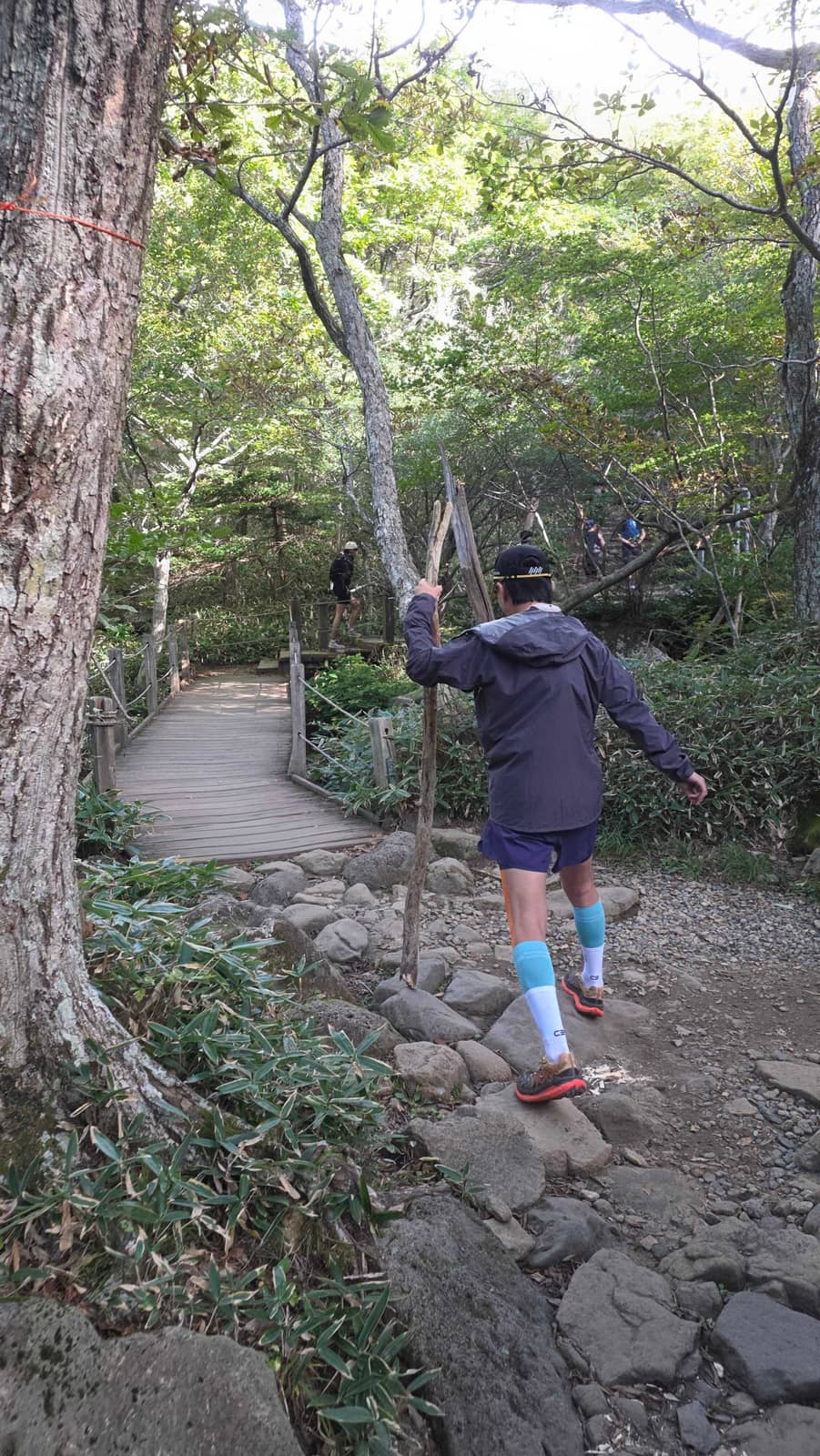
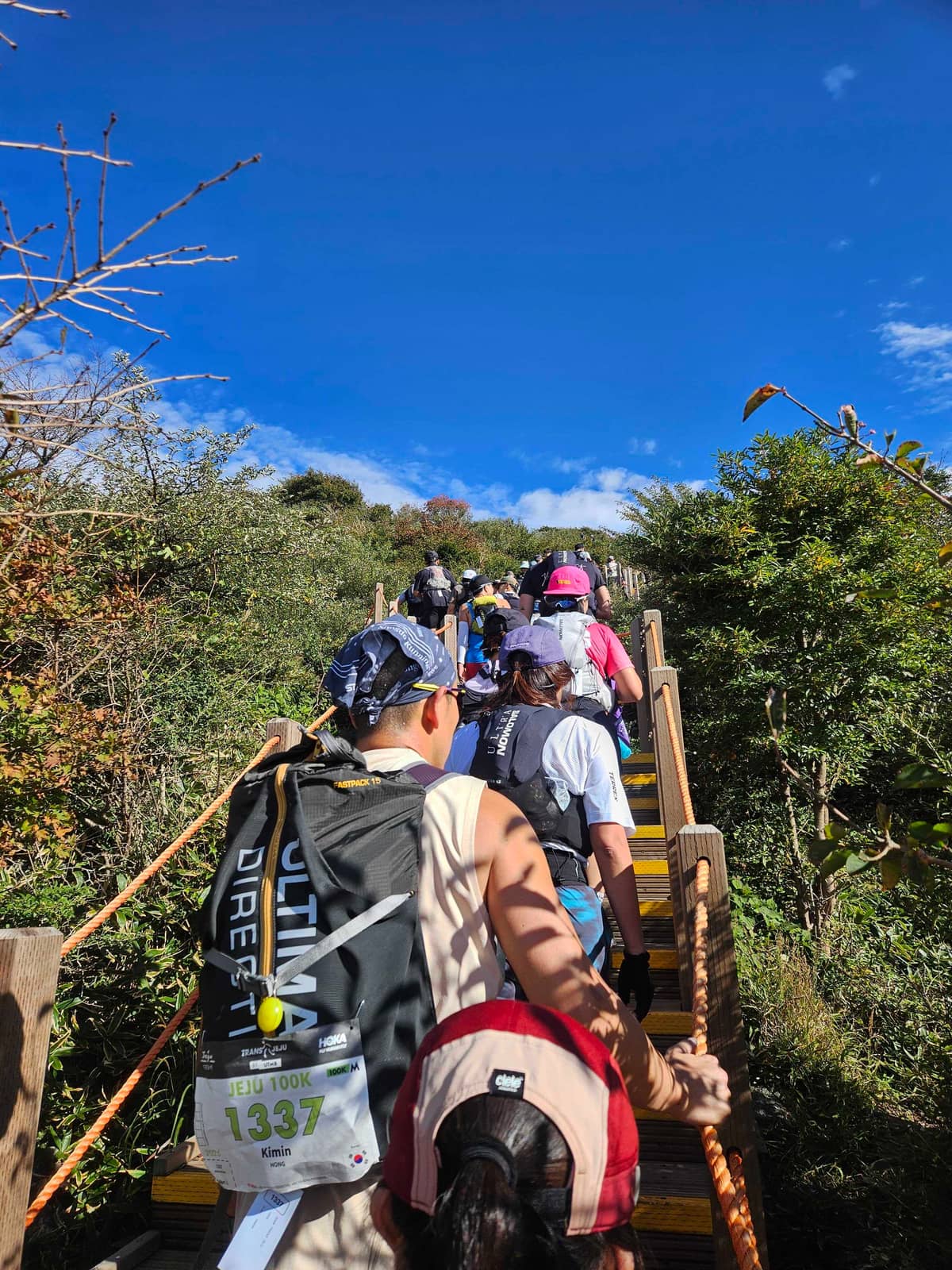
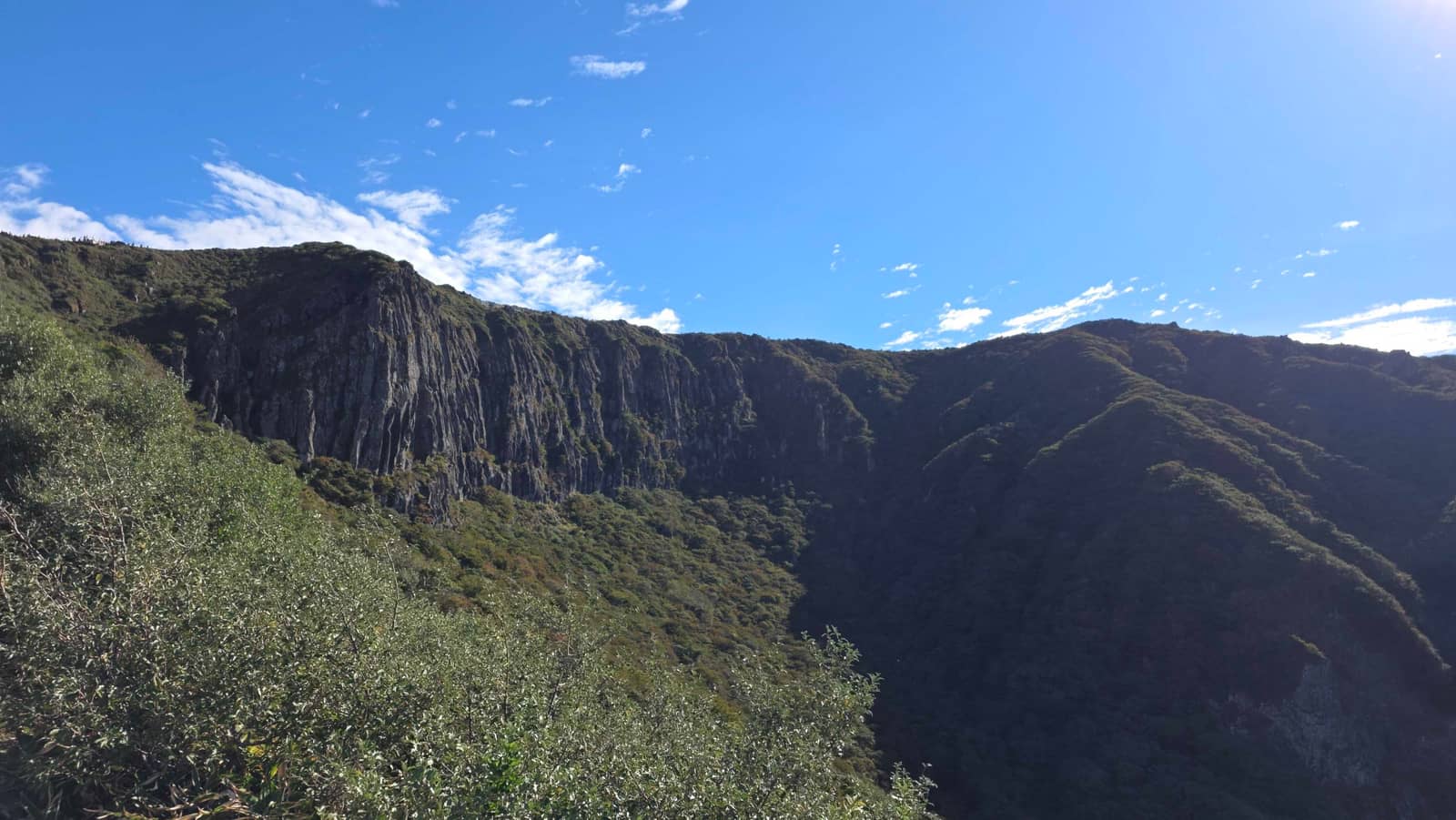
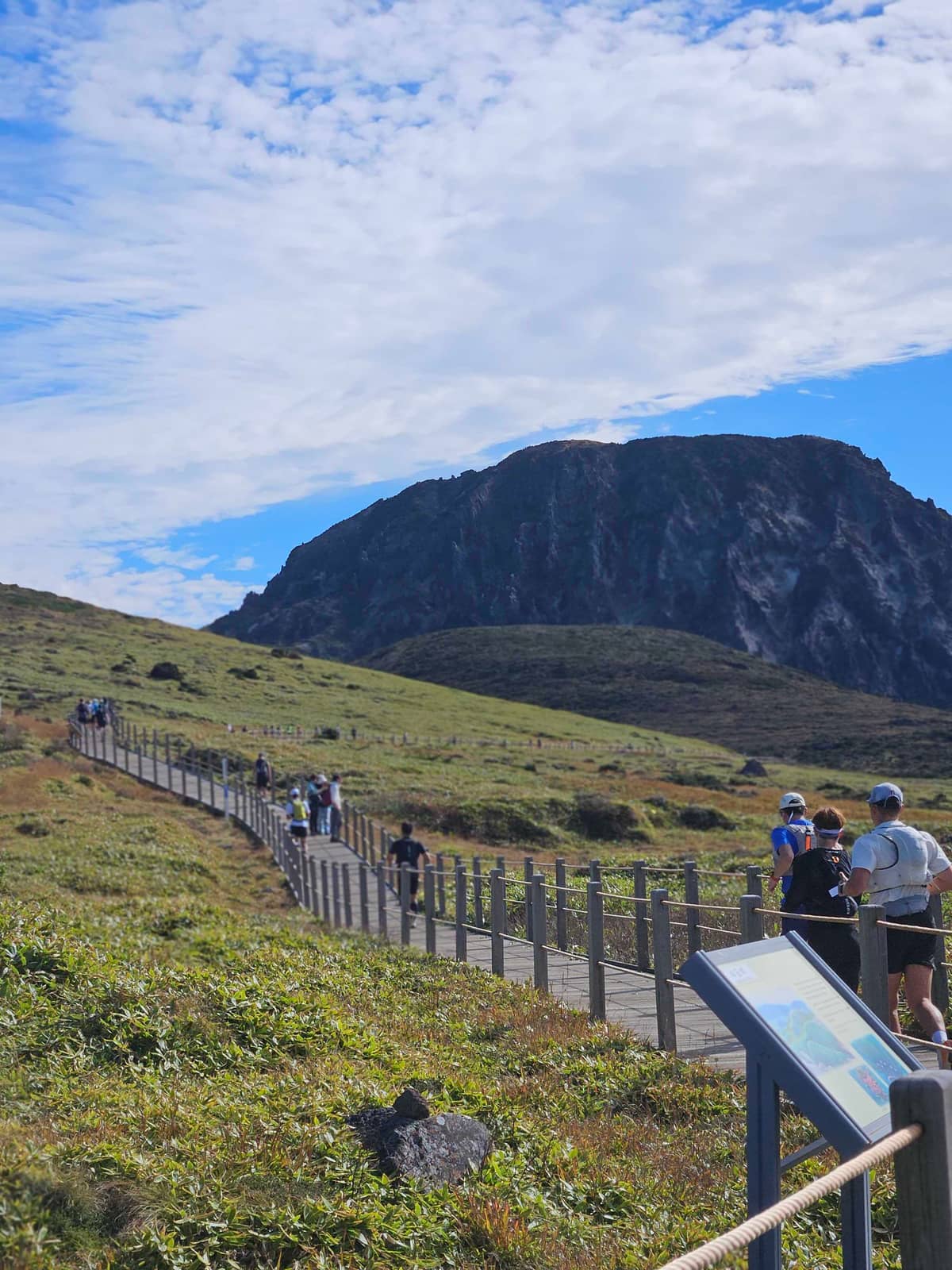
I moved slowly but did not stop. Eventually we approached the upper mountain. Separate from the pain, the weather was beautiful. I wondered whether the distant face was Hallasan's south wall and continued toward Witseoreum.
CP3 Eorimok 11:10|Descending hurt more than climbing
I had managed the ascent, but now I had to descend. The Eorimok trail looked wonderfully runnable in videos, yet all I could do was walk.
The pain grew worse whenever my knee bent deeply on the descent. When my toe caught and my leg snapped back, I cried out. High steps and rocks produced the same reaction. I desperately wanted to quit, but my friend kept me moving.
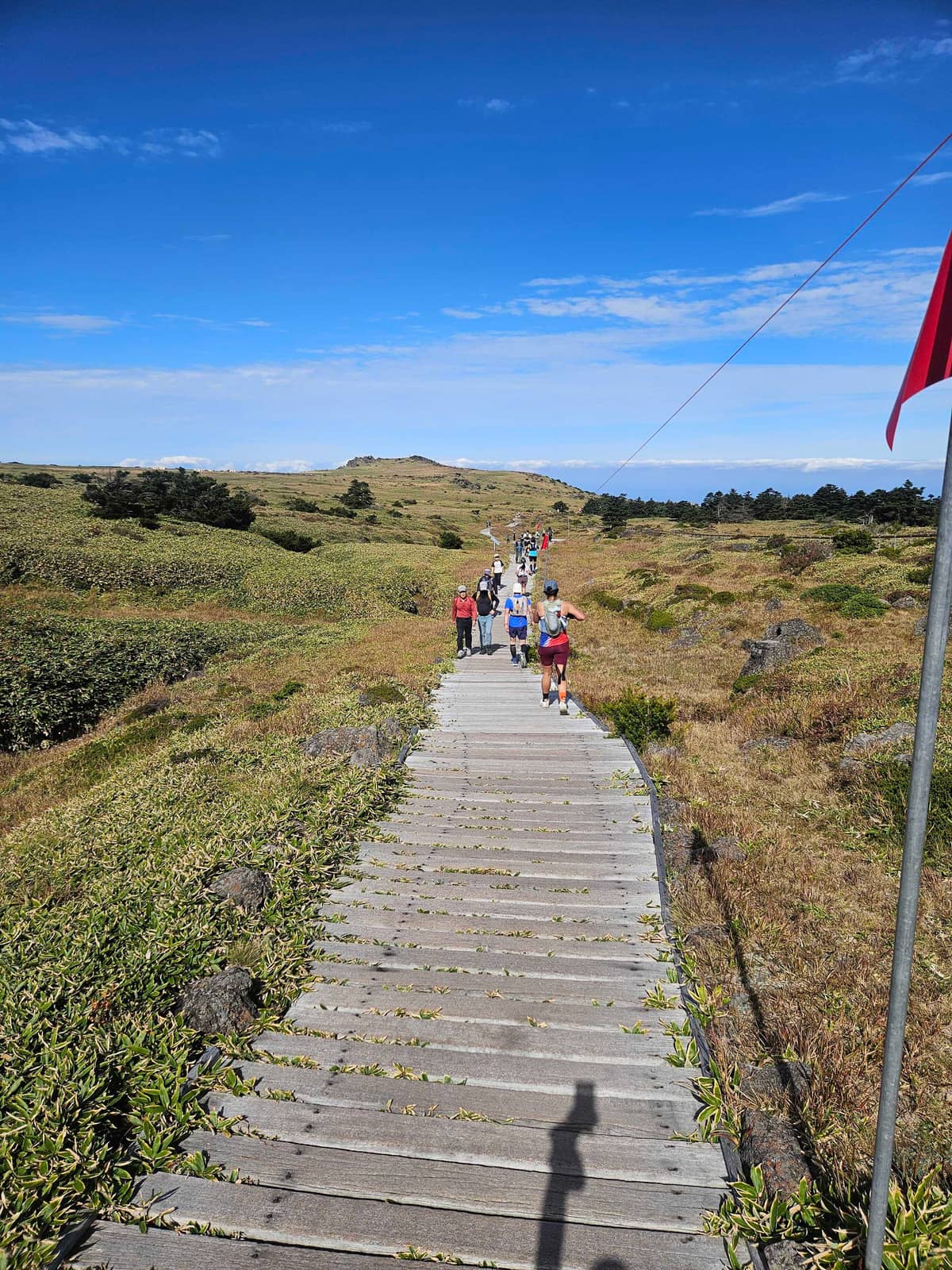
I finally reached CP3 Eorimok at 11:10. There was no food left when I tried to refuel. I filled only my water, rested, and decided to attempt the road to Gwaneumsa, believing it would be my final checkpoint.
CP4 Gwaneumsa 12:30|I ran to quit, then started again
Eorimok to Gwaneumsa was a road section. I could barely walk, let alone run. I played music I had saved for the suffering around 90km: Going the Distance from Rocky.
I ran as hard as I could. With my heart rate up, the pain briefly seemed to fade, but it felt twice as strong whenever I stopped. Expecting to DNF at Gwaneumsa, I spent what energy I had left. After replaying the song about three times, I saw the parking area.
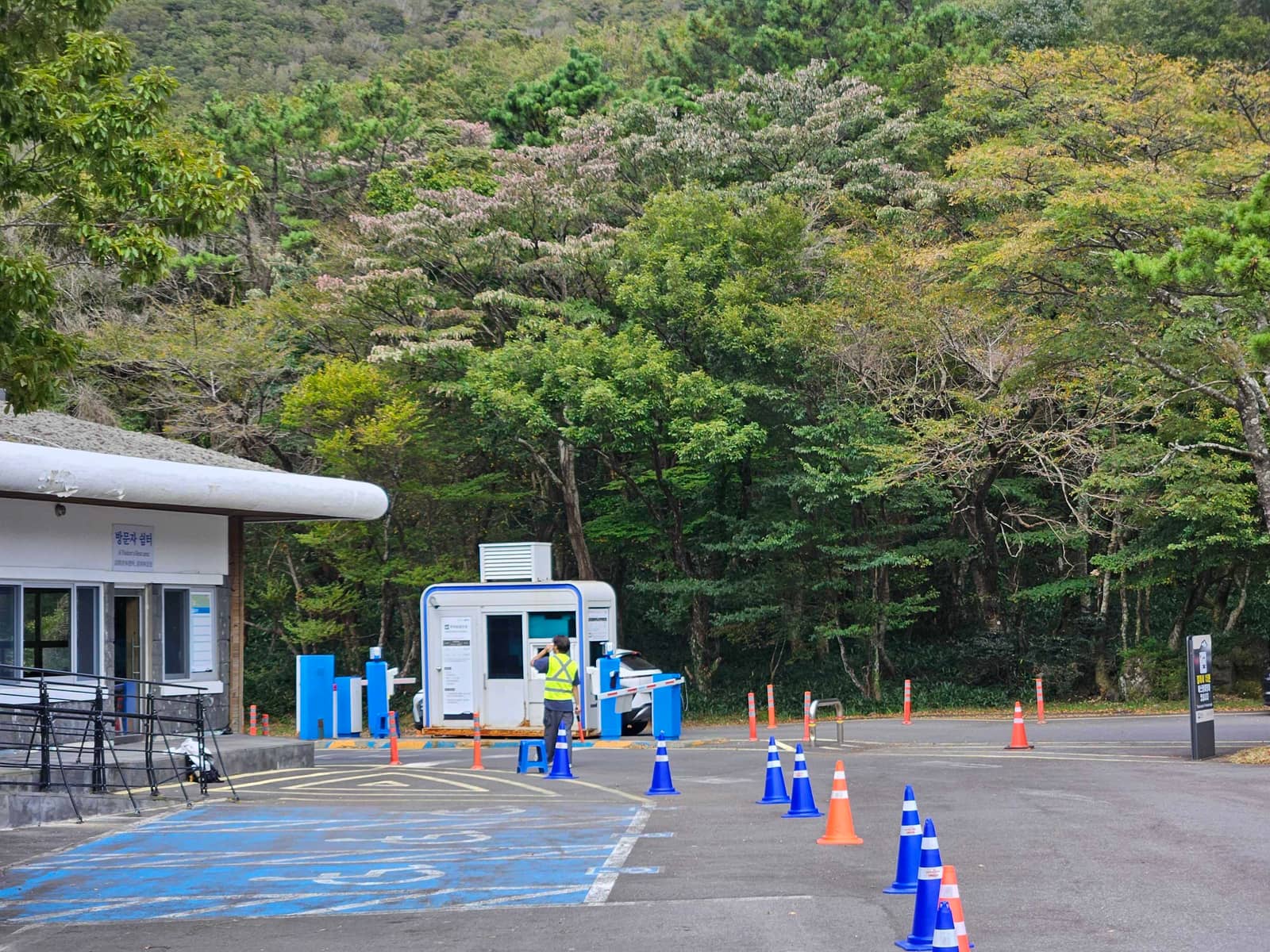
I arrived at CP4 Gwaneumsa at 12:30. The gear check covered my waterproof jacket, long pants, and emergency blanket. I collected ramen and rice, shuffled up the steps, and sat down to eat.
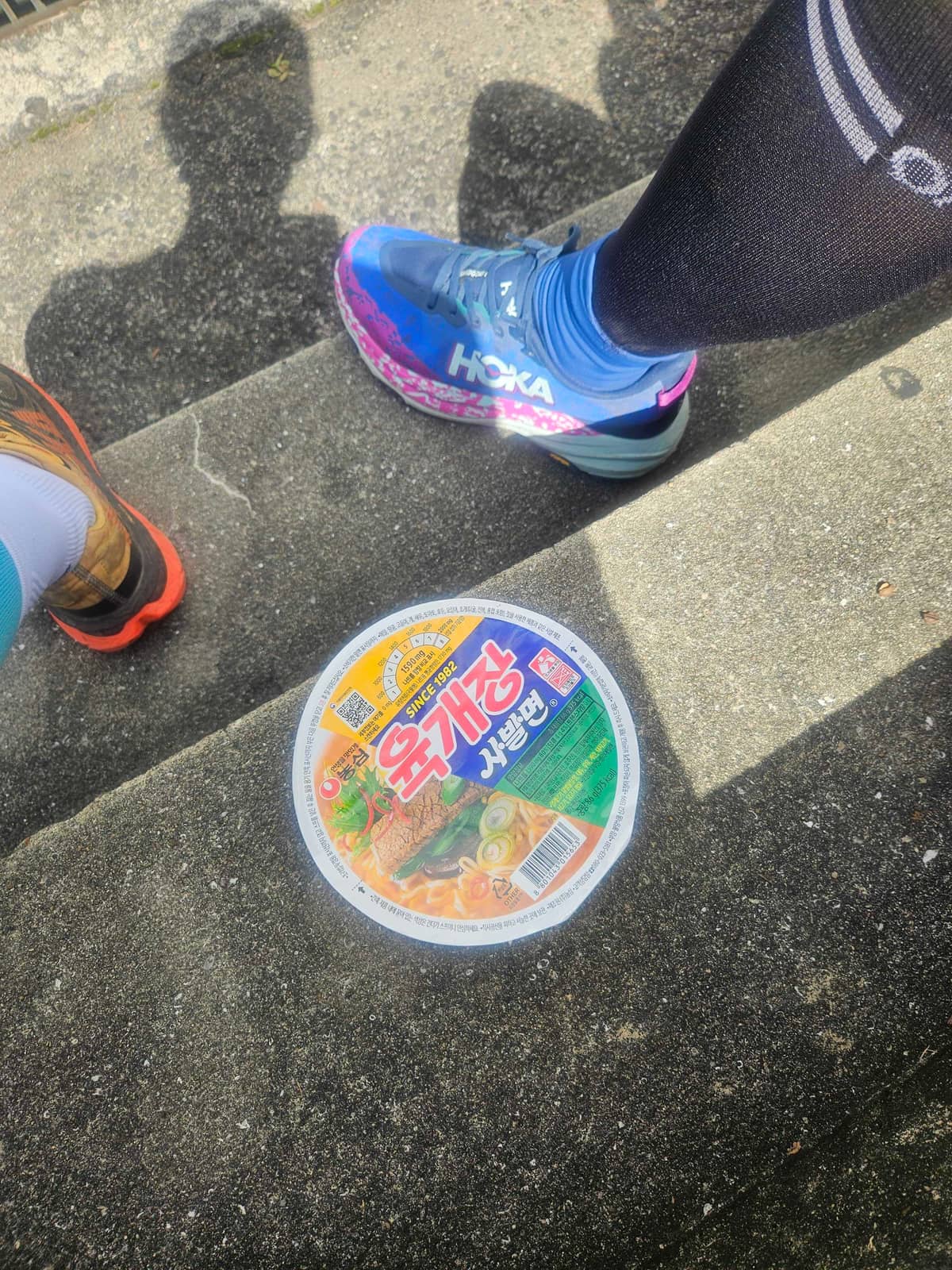
After eating, I found myself collecting my drop bag without consciously deciding to continue. I changed socks and shoes and packed gels and supplies. A longer break made another attempt seem possible. Somewhere along the way, the plan to stop had disappeared, and I headed toward Baengnokdam.
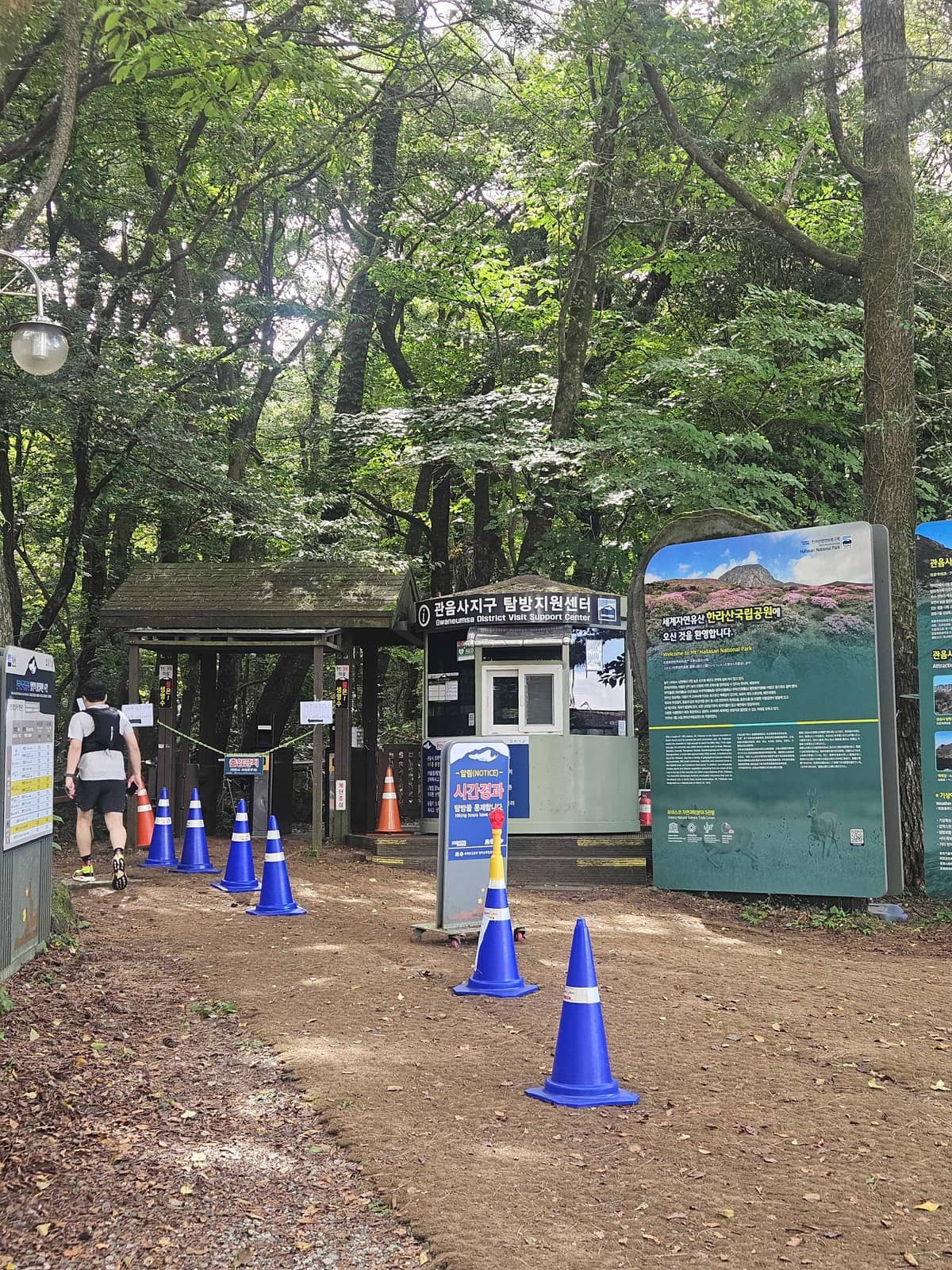
Gwaneumsa to Baengnokdam|A second Hallasan in the fog
The opening trail was manageable. I could not run, but I could walk. Beyond the wooden bridge, the Gaemideung climb brought long staircases and rock steps. I climbed, rested when it hurt, and climbed again.
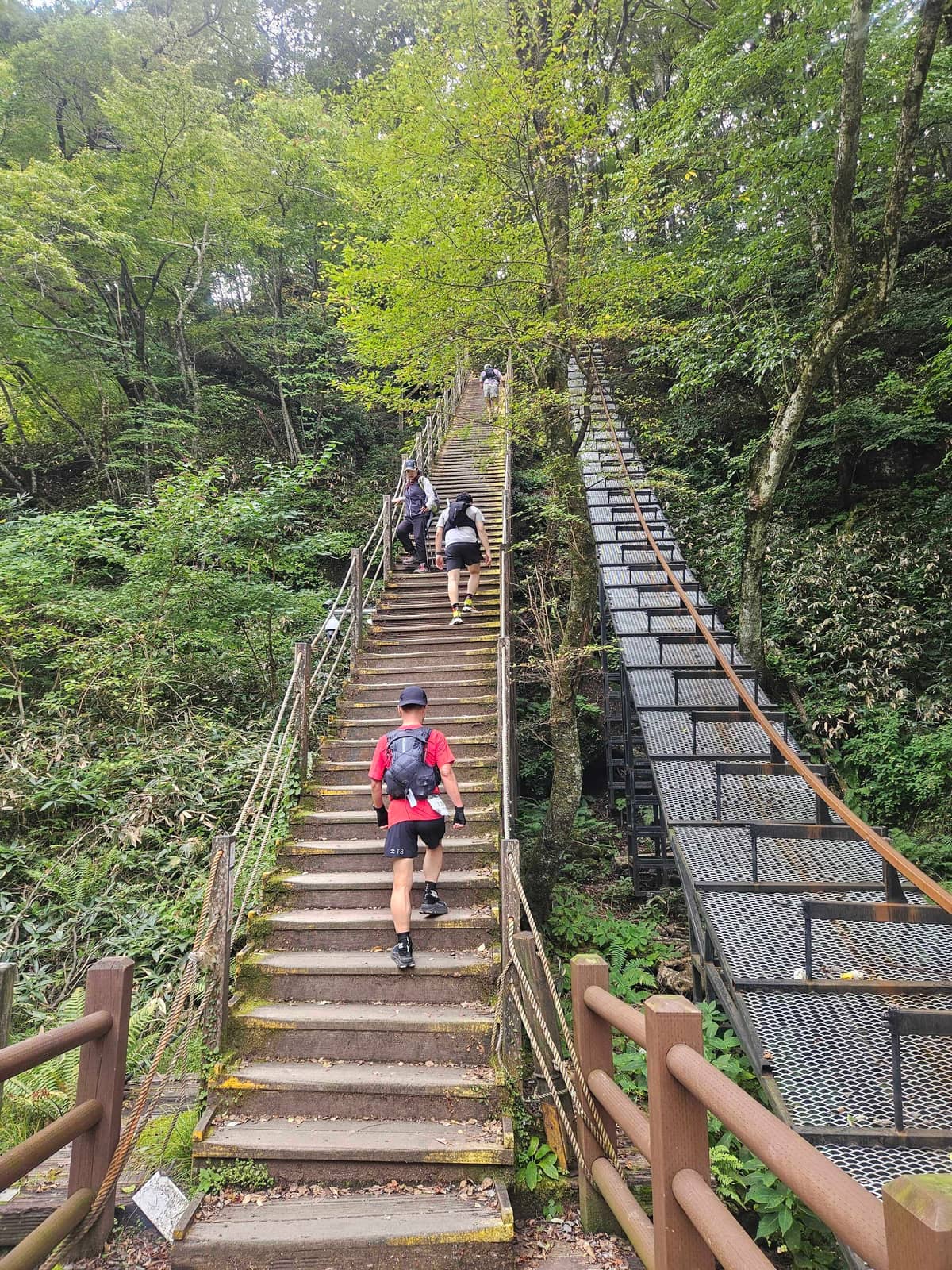
Samgakbong Shelter came into view. My friend had only reached this point on a previous trip before bad weather forced him back. We used the restroom and continued toward Baengnokdam.
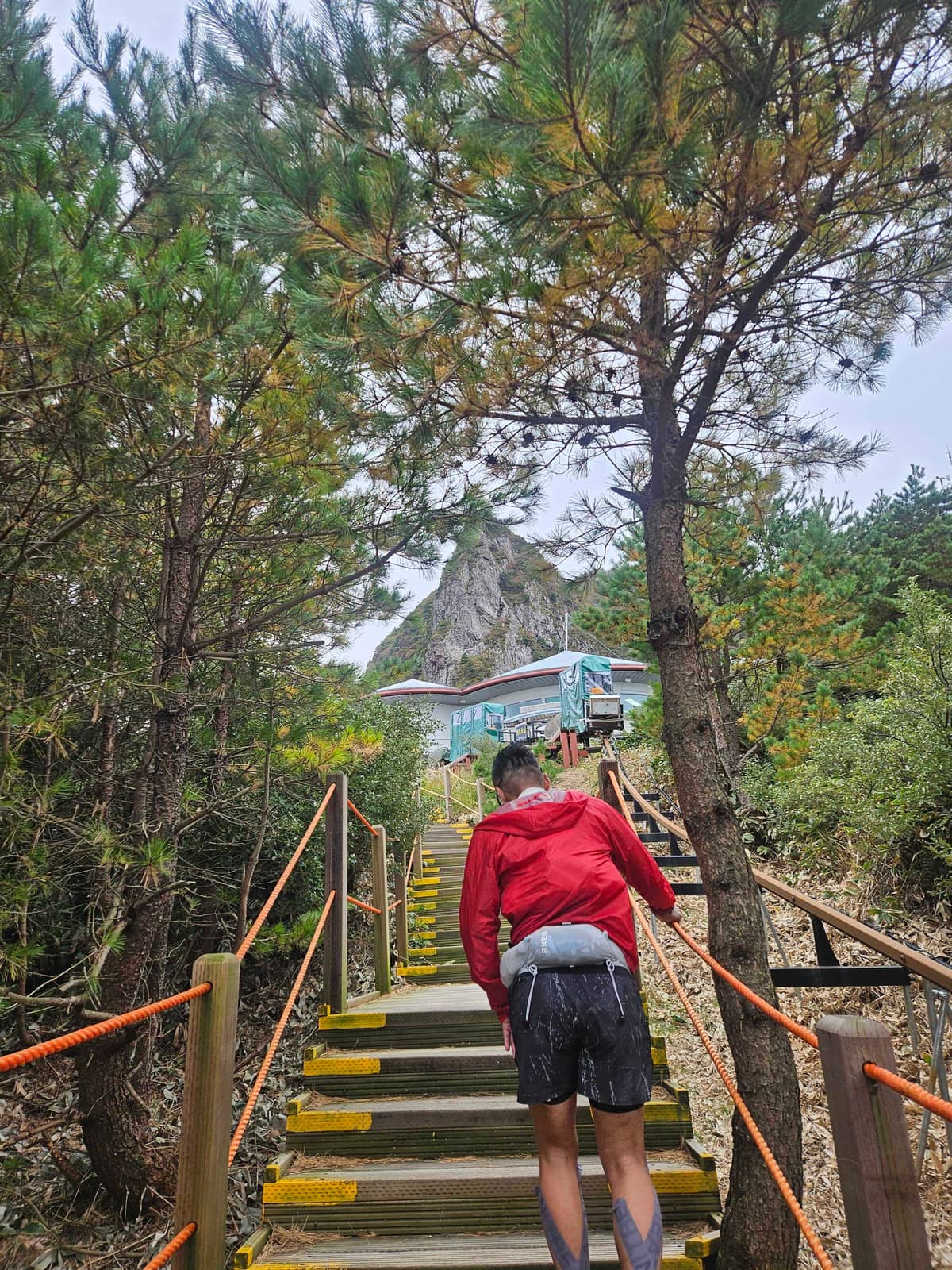
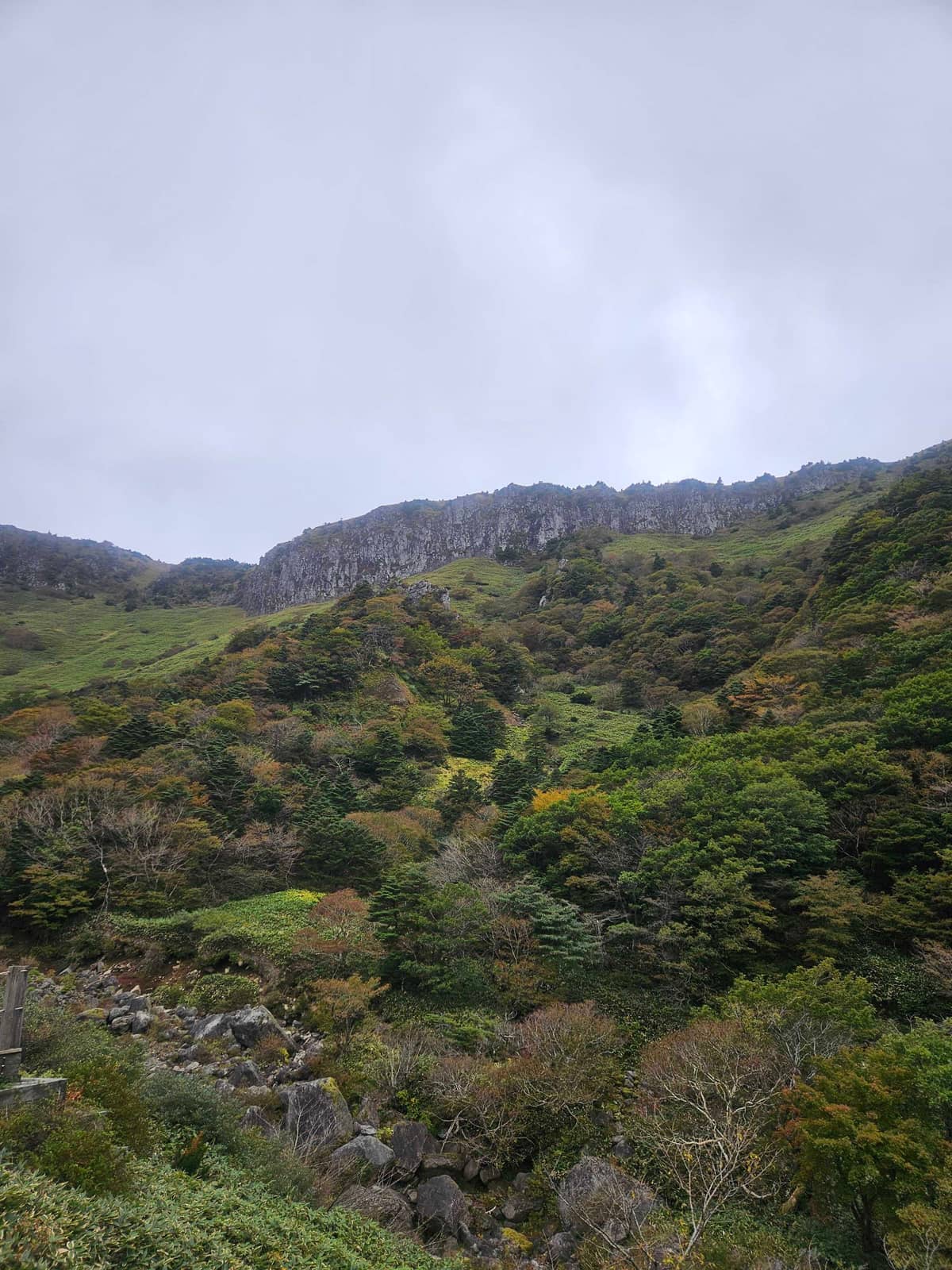
The immense staircase continued, and I stopped many times. I eventually reached Baengnokdam, but it was what Korean hikers call “gom-tang”: dense, soup-like fog with no view at all.
CP5 Seongpanak 19:40|My first DNF
Cloud, wind, and cold arrived as we began the Seongpanak descent. I remembered a mostly decked trail, but the route was closer to half wooden deck and half rough rock.
The deck was manageable. On the rocks, however, I repeatedly struck or twisted my leg. The trail seemed endless, darkness fell, and the rain intensified.
That was where I finally decided to stop. If he continued matching my pace in the rain, my friend risked losing body heat too. Once I clearly said I would quit, he finally let go and went ahead to get food.
Guided by my headlamp, I reached CP5 Seongpanak at 19:40. A staff member cut my bib when I registered the DNF. The feeling was relief and regret at the same time.
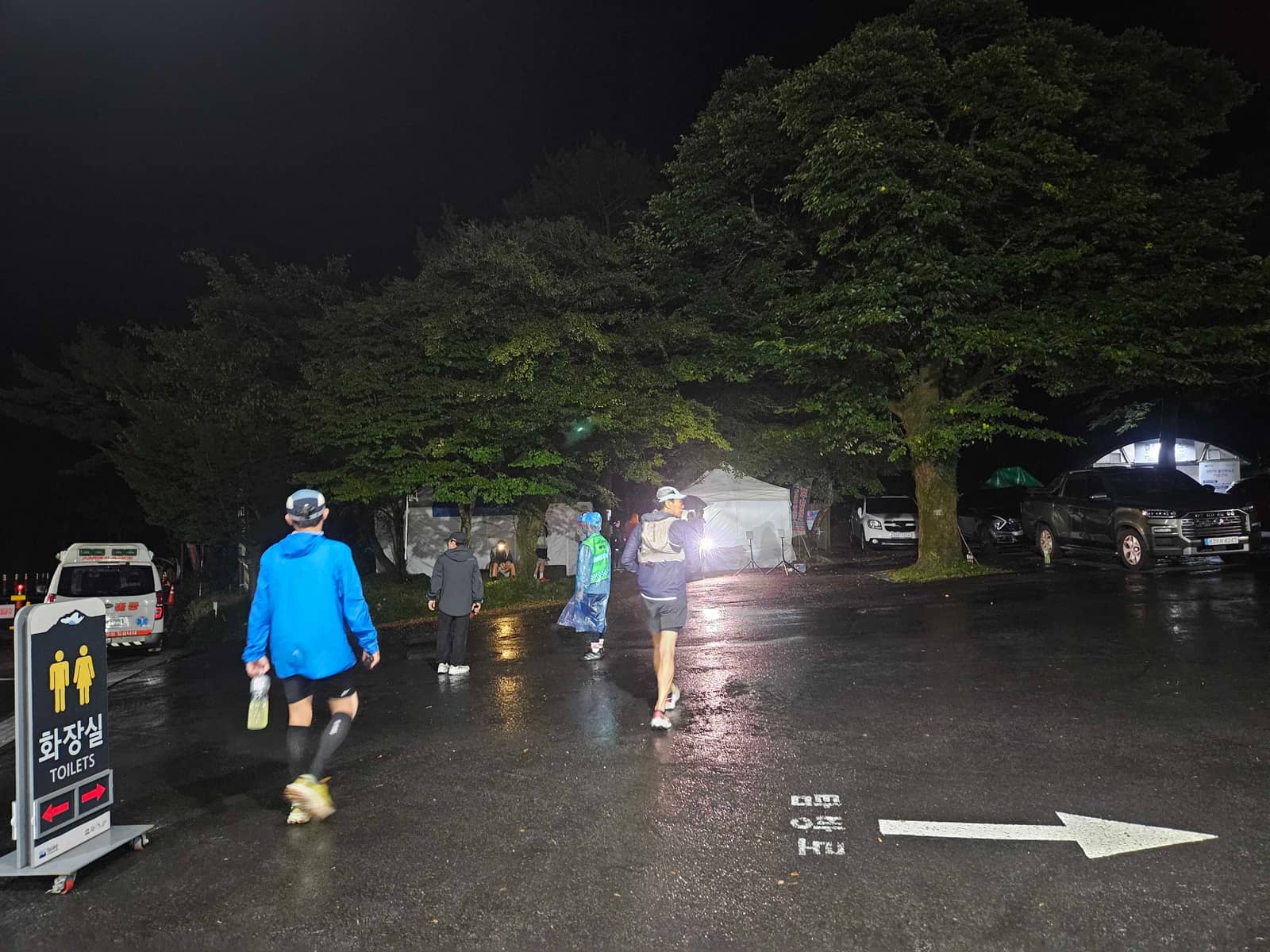
Food and water were difficult to obtain when I arrived. Complaints from runners arriving later in the field continued, and the checkpoint became tense. I also had to question whether I had relied too heavily on my usual habit of eating at checkpoints and carrying extra food away from them.
The shuttle was scheduled to leave only at the cutoff time. I eventually shared a taxi back to the stadium with other DNF runners. A couple in the taxi refused my share of the fare. I thanked them, said I would greet them if we met again, and returned to my accommodation to shower and sleep.
Why I stopped at Seongpanak
Around 45km remained between Seongpanak and the finish. I had already moved nearly 49km after the pain began, but my pre-race research told me the final 45km would not be easy.
Wet rocks, mud, streams, and night running were still ahead. I could no longer support my leg properly on descents, and I reached Seongpanak 3 hours 50 minutes behind plan. Continuing was no longer simply a matter of moving slowly; it risked a fall or a worse injury.
Having already covered 59km mattered less than whether I could move safely through the remaining 45km. This time, I decided that stopping also required courage.
My friend's finish at 7:00 AM
My friend crossed the finish line at 7:00 the next morning. After leaving me, he found another injured runner and continued helping. There were runners with bee stings, twisted ankles, and IT band pain beginning at Seongpanak. Everyone seemed to be carrying some problem.
It sounded like a film in which stragglers from a battlefield held onto one another on the way home. My friend surrendered his own time goal and brought me from Yeongsil to Seongpanak. Without him, my day would have ended much earlier than 59km.
And the waterproof jacket did look good.
Lessons for the next attempt
The lessons from this failure are clear.
- Pushing to catch the group and avoid an early bottleneck may have been too aggressive.
- Once pain began at 10km, I needed to plan around a safe exit rather than my target time.
- I need emergency calories and a water plan that do not assume every checkpoint will be fully stocked.
- Being able to tolerate a climb did not mean I could tolerate the descent.
- When a companion gives up their goal to help, their safety must become part of the decision too.
This attempt ended at Seongpanak. I failed to finish 100K, and I do not want to disguise that result as success simply because I endured the pain for a long distance. Both my early pacing and my decision-making around withdrawal are work for the next attempt.
My 2026 TransJeju 100K ended at 59km, at Seongpanak. Next year, I hope to return to the start line carrying these lessons.
That is the end of this race, with a rematch promised for next year.